
Utah winters are hard on brakes. Road salt and brine, freezing nights, slushy canyon roads and cold starts all add wear that you may not notice until something squeals, grinds or pulls. A quick check now, before the worst of the snow, is a lot cheaper than a seized caliper in January.
Here's what winter does to your brakes, the warning signs to watch for, and what you can do about it without losing a day at the shop.
What winter does to your brakes
Salt and brine eat at the hardware
The salt and brine that keep I-15 and the canyon roads open get sprayed straight onto your wheels and brakes. Over a season it speeds up rust on rotors, brake lines, caliper brackets and the slide pins that let the caliper move freely. When those pins seize, one pad drags or stops working, and the brakes wear unevenly or pull to one side.
Rust on the rotors
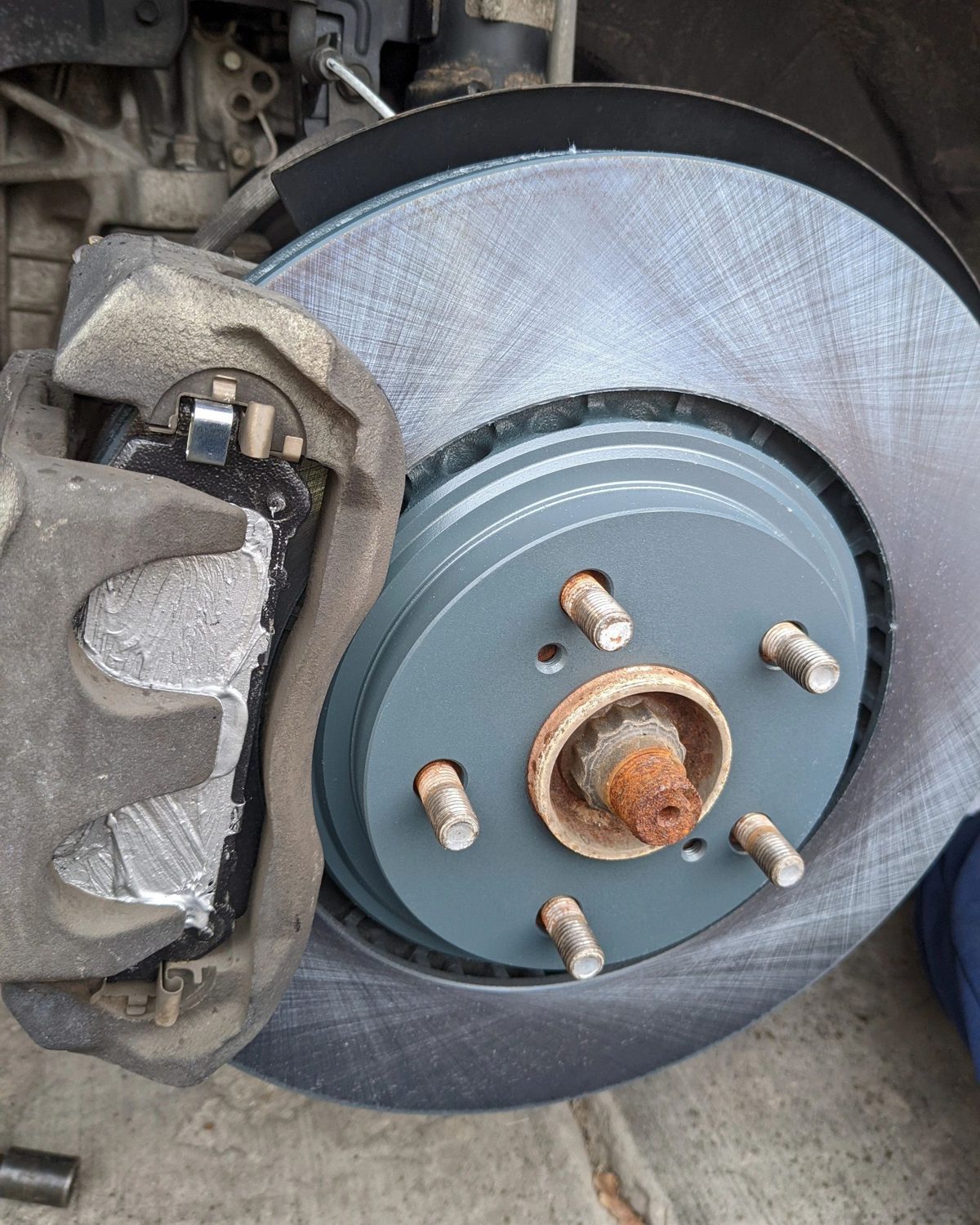
A thin layer of surface rust after a snowy night is normal and usually wipes off after a few stops. Rust that stays, builds up on the edges, or leaves the rotor pitted and rough is different. It can cause grinding, vibration and shorter pad life. That's when a rotor replacement may be due.
Canyon descents heat things up
Coming down Provo Canyon, Spanish Fork Canyon or Parleys from Park City means long stretches on the brakes, often in slick conditions where you can't just coast. Heat plus cold, wet roads is a tough mix for worn pads and older rotors. Use a lower gear on long grades, leave extra following distance, and don't ride the pedal the whole way down.
Ice puts your ABS to work
On ice and packed snow, your anti-lock brakes do a lot of the work. A pulsing pedal while the ABS is active is normal. An ABS or traction control light that stays on is not, because it can mean the system is switched off right when you need it most. If that light is on, look into ABS brake repair before the next storm.
Winter brake warning signs
- Grinding or scraping that doesn't go away after the first few stops
- The car pulls to one side when you brake
- A soft, spongy or low brake pedal
- Shaking in the steering wheel or a pulsing pedal when you're not on ice
- A burning smell or one wheel that's much hotter or dirtier than the others
- The ABS or brake warning light is on
Pulling and a hot wheel often point to a sticking caliper. Our mobile brake caliper replacement page explains what's involved. For squealing, grinding or worn pads, see mobile brake repair and pad replacement.
A simple winter brake checklist
- Get the pads and rotors checked before the heavy snow, so you're not finding out on a canyon road.
- Rinse the salt off now and then, including the wheels and underside, especially after storms.
- Pay attention to new noises. A noise that's new this winter is worth a look, even if the car still stops fine.
- Don't ignore warning lights. ABS and brake lights matter most on icy roads.
- Check your trailer brakes too if you tow in winter. Wet, salty roads are hard on trailer brake parts and wiring. See trailer and fleet brakes.
Skip the cold drive to the shop
BJ Mobile Brake comes to your home, work or job site, so you don't have to drive a car with questionable brakes on icy roads or wait around a shop. We cover all of Utah County, plus Sandy, Draper, Herriman and Bluffdale, with same-day service in most areas and no trip charge. Check our service areas to see if we come to you.
Brakes acting up this winter? Call (801) 636-2433 for a free quote.